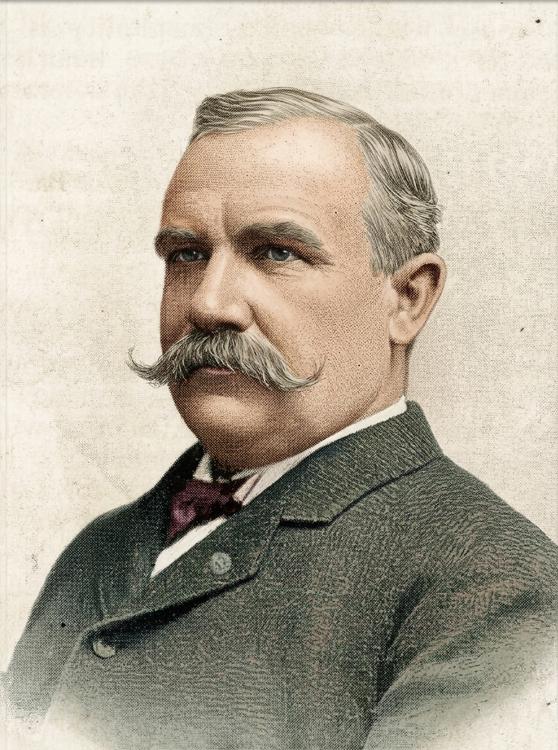
Frank (Franz) Ulmer was born in Heppenheim, Hesse-Darmstadt, Germany, on March 6, 1845, and grew up there. As a young adult, Ulmer traveled to Weinheim, where he found work in a tannery. There, he worked and learned the tanner’s trade. After completing his apprenticeship, Frank booked passage on a steamer and came to America in I866. After an unsuccessful attempt to find steady work in Ohio, he moved to Norwich, CT, where he found work with Charles Farnham, who was building a tannery on Talman Street.
Utilizing the skills and experience he’d gained in Germany, Frank soon became the company manager. The tannery prospered under his watchful eye. In 1873, Frank, in partnership with Henry Gallup and George Smith, bought out Farnham’s interest in the tannery, and the new concern became known as the Norwich Belt Manufacturing Company.
As the Industrial Revolution gathered steam, more mills were built, and as they came online, they created heavy demand for the leather belts that transferred power to the machinery. To meet the rising demand for leather goods, a second tannery was constructed in Greeneville (ca. 1877). By investing his earnings wisely, Ulmer became one of Norwich’s wealthiest residents.
In 1893, Frank Ulmer bought out Henry Gallup and became the business’s sole owner. The following year, Frank, along with his son Henry Ulmer, formed the Ulmer Leather Company and built a large tannery on Forest Street, which employed several hundred people. The business continued to grow as the 1800s drew to a close.
Beyond his business success, Mr. Ulmer was community-minded. He was a member of the Norwich Board of Trade, Norwich’s socially elite Arcanum Club, a 32nd-degree Mason at the Somerset Lodge, No. 34 Ancient Free & Accepted Masons, and a member of several other fraternal orders.
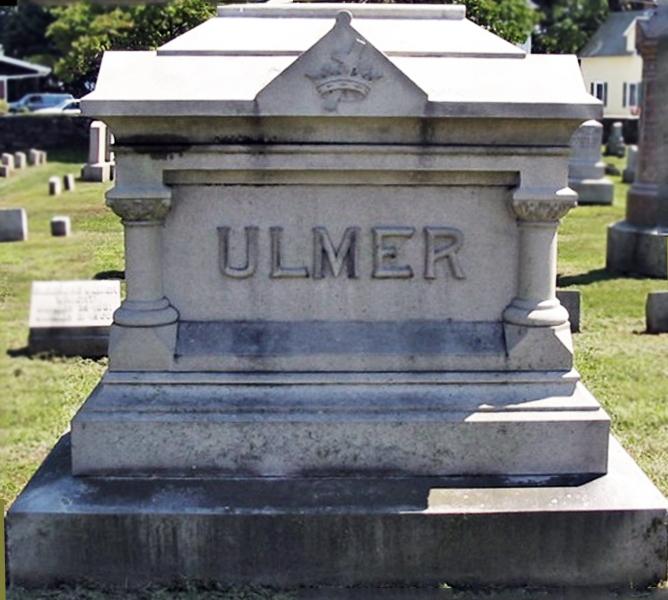
On April 19, 1868, Frank Ulmer married Eleonore Frickman in Norwich, and together they had five children: Henry (who took over the tannery business), Catherine, George, Joanna, and Eleonore. Besides the tannery, Frank Ulmer served on many civic committees in Norwich, including the board of directors for the Uncas and the Second National Banks, and was a trustee for the Chelsea Savings Bank.
Frank Ulmer died unexpectedly on May 23, 1903, at age 58 in Norwich.
His funeral was held at the Second Congregational Church. The pastor, reflecting on Frank’s kind nature, said, “The roots of this man’s being have run into many places and have run deep. He was a modest and unassuming man, but he lived a life that was felt. In business, in the affairs of the city, and among a large circle of friends, as well as in his home, where his strength was a shelter, he will be missed in countless ways.”
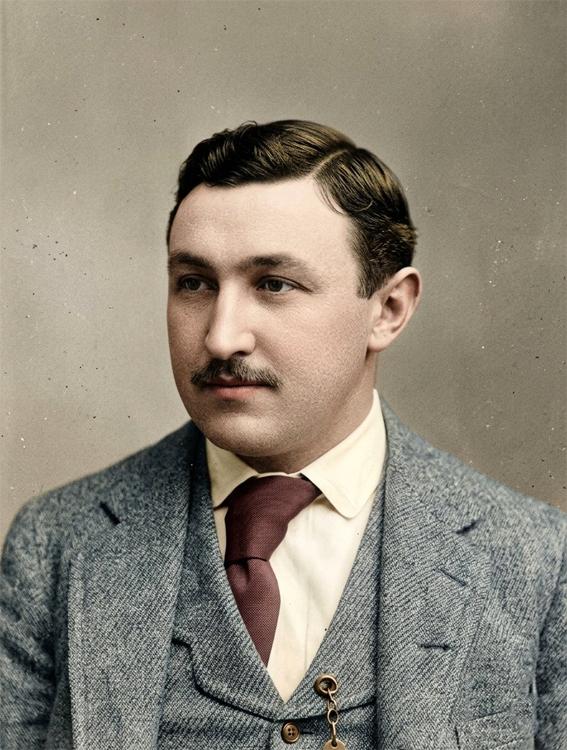
Henry F. Ulmer was born January 17, 1869, in Norwich, CT, to Frank and Eleonore Frickman Ulmer. Henry attended local Norwich schools and began his professional career with the Norwich Belt Manufacturing Co., a local tannery business in which his father, Frank Ulmer, held a joint partnership. Demand for leather belts grew with the industrial expansion of the mid to late 1800s, and Henry advanced to superintendent within a few years. He also served as general superintendent of two tanneries in Greenbush, NY, and Readsboro, VT.
In 1893, Henry Ulmer, along with his father, divested themselves of other business relationships to establish the Ulmer Leather Company in a new tannery building on Forest Street in Norwich. After his father’s unexpected death in 1903, Henry became the sole owner of the Ulmer Leather Manufacturing Co.
On November 28, 1894, Henry married Cora Mae Wyman of Taftville. They had two children: Frank Eccles and John Wyman.
In June 1917, Henry and Cora Ulmer, along with another couple, the Allens, decided to take a road trip to Montreal for vacation. On their return trip, Cora, who had a history of asthma, became quite ill, and her condition continued to worsen. So the couple decided to check into a hotel in Lake Placid, NY. The hotel doctor treated Cora, and she slept well. By morning, she seemed to be improving, so Henry and the Allens continued on to Norwich, leaving her under the doctor’s care in Lake Placid.
Henry returned in a few days expecting to find Cora fully recovered. Unfortunately, she had contracted pneumonia and passed away that evening.
The following year, June 5, 1918, Henry Ulmer, now aged 49, married Hazel B. Smith, aged 33, seventeen years his junior, described as an attractive blond, at Christ Episcopal Church on Washington Street, Norwich.
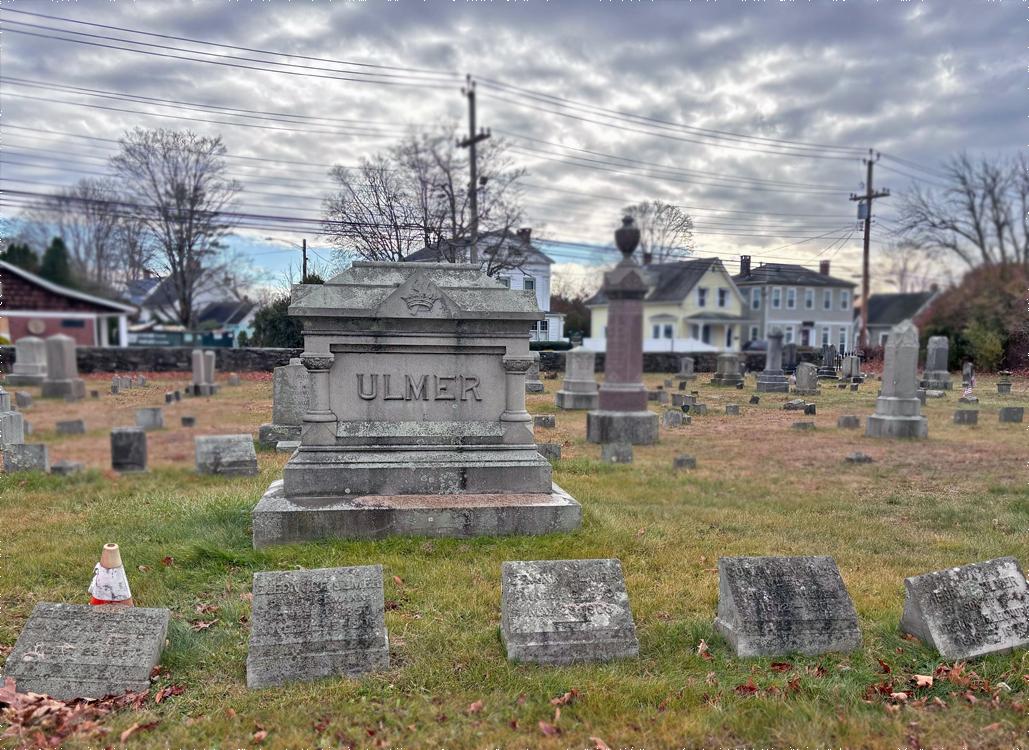
*Place cursor over photo to magnify
April 27, 1929, ten years later, Henry Ulmer’s marriage broke down when he found out his wife, Hazel, was having an affair. As a leader in Norwich’s Christ Church, he feared his wife’s transgressions would become public. The stress from this situation became unbearable to the point of causing Henry to be hospitalized.
Due to his depression, he was admitted to Yale New Haven Hospital. While unattended, he took out a pistol he’d brought with him and killed himself by shooting himself in the heart.
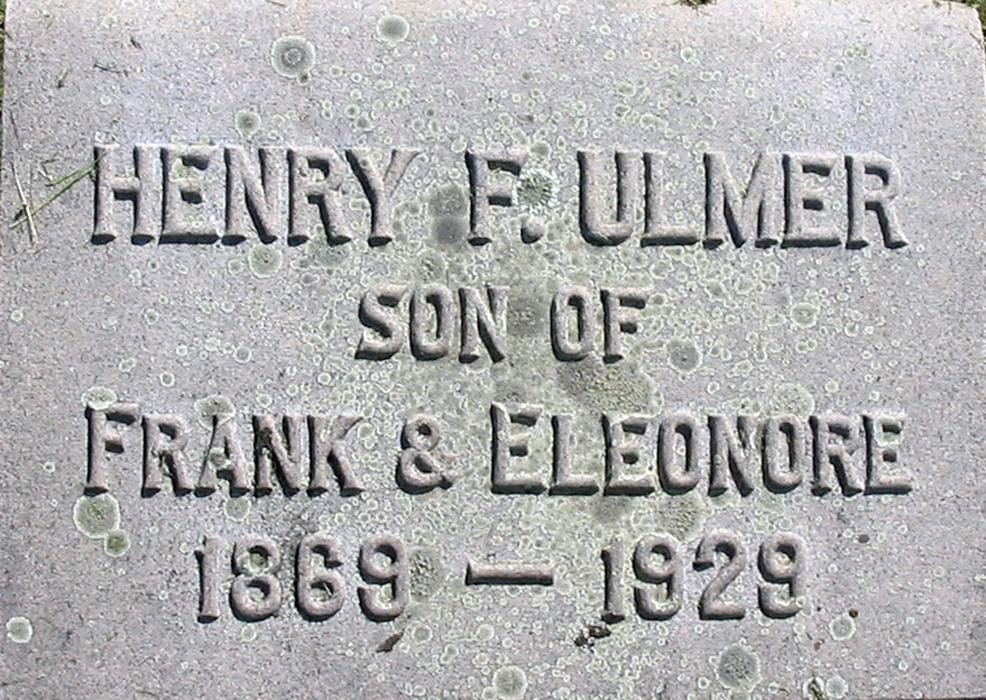
Aftermath of Henry Ulmer’s Death
Five months later, on November 3, 1929, Rose B. Frink filed a $100,000 ($1.9 million in 2026 $) alienation suit, charging Hazel Ulmer, widow of millionaire Henry Ulmer, with alienation of affection from her husband, Charles W. Frink, a wealthy dairy farmer.
Twenty days later, on November 23, 1929, Helen Antzis filed also a $35,000 ($683,000 in 2026 $) alienation suit, charging Rose B. Frink with stealing the love of her husband, Michael, general manager and partner of the Frink Antzis Dairy.
Seven months later, on June 13, 1930, in the Bridgeport, CT, Courthouse, Rose B. Frink was granted a divorce with custody of a minor son, Charles Jr., and settled the $100,000 suit with Hazel Ulmer for $30,000. However, Charles Frink stated in court that he had no intention of marrying Hazel.
Two weeks later, on July 3, 1930, in a clandestine elopement, Charles William Frink married the wealthy and attractive Norwich widow, Hazel Smith Ulmer, in Willimantic, CT, before a Justice of the Peace. After they were united in a civil ceremony, Mrs. Ulmer, who was 44 and Charles Frink nine years her junior, left for the bride’s home in Norwich, 167 Harland Road.
While the newlyweds enjoyed a quiet honeymoon, Mrs. Rose B. Frink, the 28-year-old blond who named Mrs. Ulmer as co-respondent when she divorced Charles Frink in Bridgeport on June 13, sat alone in the Frink bungalow not far from her rival’s mansion. To her credit, the $30,000 Mrs. Ulmer was said to have paid her in a private settlement of her $100,000 suit for theft of Charles Frink’s affections sat in a Norwich bank.
Under construction
Under construction